
by Todd H.
I’ve never known a life that didn’t include sports. From the time I was six years old, I was constantly competing. I grew up playing baseball, basketball, and football, and continued all three through high school. Athletics weren’t just something I did – they were part of who I was.
After graduating high school, I joined the U.S. Navy, where I served from 1994 to 2000. During those years, I continued playing competitive basketball all over the world. When my military service ended, my passion shifted toward all-natural bodybuilding. I loved the discipline, the challenge, and the pursuit of becoming the strongest version of myself.
Then life took an unexpected turn.
A shoulder injury requiring surgery forced me to step away from bodybuilding and reconsider what came next. Fortunately, I had already discovered another passion while living in San Diego during the mid-1990s: mountain biking.
What started as weekend rides on Southern California trails quickly became an obsession. I traded barbells for bicycles, lost nearly 50 pounds, and found a sport that challenged me physically, mentally, and emotionally in ways I had never experienced before.
Before long, I wasn’t just riding – I was racing.
Starting as a beginner, I steadily progressed through the ranks until I became a Category 1 mountain bike racer. I loved everything about endurance racing – the preparation, the suffering, the strategy, and the feeling of seeing what I was capable of accomplishing.
Then, in 2004, everything changed. During a training ride, I suddenly lost consciousness and crashed.
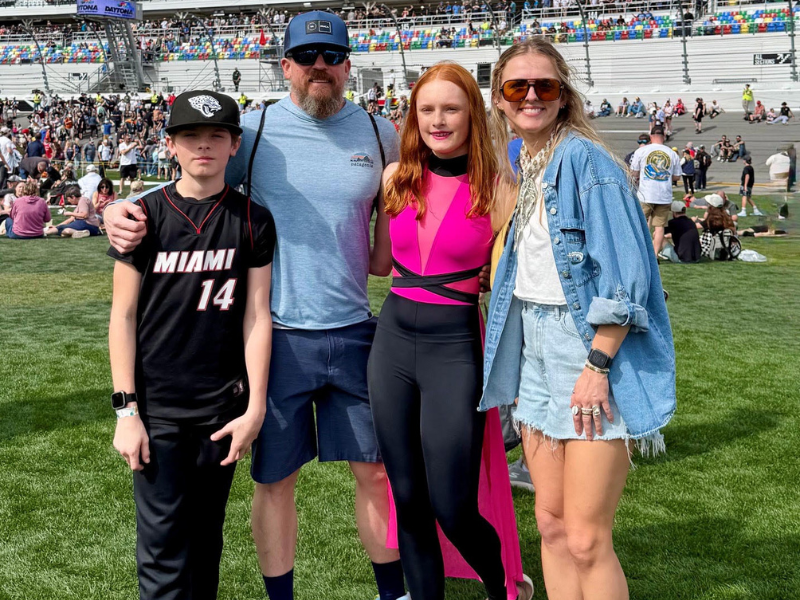
The experience was frightening. I saw several cardiologists who suspected hypertrophic cardiomyopathy (HCM). I was prescribed medication, but there were still many unanswered questions. At the time, I wasn’t told to stop living my life. I was simply advised to monitor my condition.
So I did what athletes do. I kept training. I kept racing. I kept chasing the sport I loved. For the next four years, I continued competing, believing my condition was under control.
Then came the 2008 8 Hours of Labor mountain bike race. I knew something wasn’t right. I felt unusually fatigued, and my body was telling me a story I couldn’t ignore. That race ultimately led me to Mayo Clinic, where specialists performed a comprehensive evaluation, confirmed my diagnosis of hypertrophic cardiomyopathy, and completely changed my understanding of what had been happening inside my heart.
Receiving that diagnosis was both frightening and clarifying. For the first time, I understood why I had fainted in 2004. I understood why I had struggled during that race. But I also found myself wondering what the future would look like.
Would I ever race again?
Could I still be the athlete I had always been?
Would I be around to watch my future children grow up?
For the next several years, I stepped away from racing while working closely with my care team at Mayo Clinic. I learned everything I could about HCM, listened to my body, and slowly redefined what success looked like.
Then, in 2011, I faced another difficult decision. My physicians recommended an implantable cardioverter-defibrillator (ICD). Accepting that recommendation wasn’t easy. Like many patients, I wrestled with what it represented. But at the same time, my daughter Riley was about to be born.
That changed everything.
I realized I wasn’t choosing an ICD because I was afraid of dying. I was choosing it because I wanted every opportunity to be there for my family. Looking back, it was one of the best decisions I’ve ever made.
The ICD didn’t erase the risks of HCM, but it gave me something I desperately needed – confidence. Confidence to begin living again.
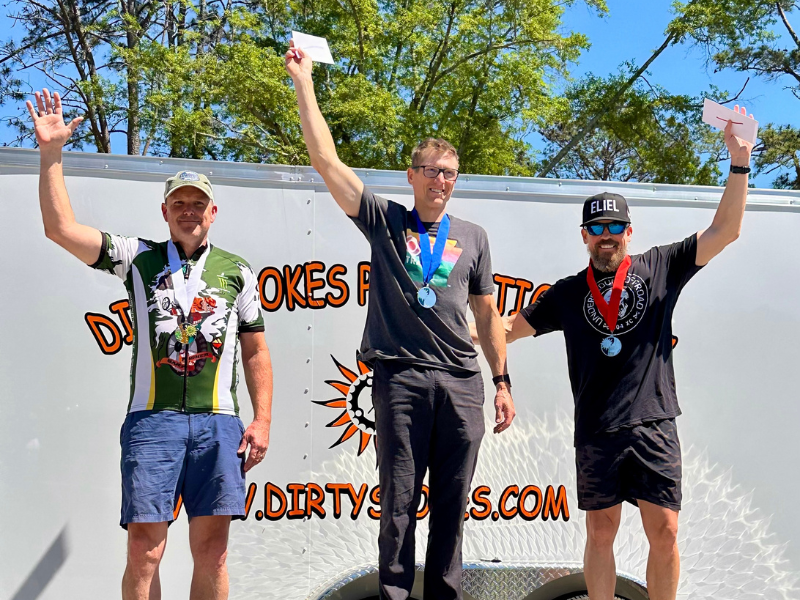
I slowly returned to riding. One mile became ten. Ten became fifty. Eventually, I found myself dreaming about racing again.
In 2013, I returned to the very race that had ultimately led me to Mayo Clinic five years earlier. Crossing that finish line remains one of the proudest moments of my life. Not because of where I finished, but because I proved to myself that HCM didn’t get to decide who I would become.
One of the most important lessons I learned through Mayo Clinic was that HCM wasn’t just about me. Because hypertrophic cardiomyopathy is often inherited, I underwent genetic testing. My physicians identified the specific genetic variant responsible for my HCM: MYBPC3.
That discovery changed our family’s story.
All three of my children underwent genetic testing. Two of them carry the same genetic variant, but neither has developed hypertrophic cardiomyopathy. Because we know they carry the gene, they receive regular cardiac evaluations and monitoring.
As a parent, that’s an incredible gift. Knowledge doesn’t eliminate uncertainty, but it allows us to be proactive rather than reactive. Instead of wondering, we have a plan. Instead of waiting for symptoms, we’re monitoring their hearts with experienced specialists.
Today, endurance mountain biking remains a huge part of my life. People are often surprised to hear that someone living with HCM continues to compete in long-distance mountain bike races.
My experience has taught me that exercise and HCM are not one-size-fits-all. Every patient is different. Every heart is different. Every treatment plan should be individualized.
I’m incredibly fortunate to receive my care from one of the world’s leading HCM programs at Mayo Clinic. Together, my physicians and I have had honest conversations about symptoms, risk, training, and how to safely pursue the activities that give my life purpose.
I don’t encourage others with HCM to simply do what I do. I encourage them to find an HCM specialist, ask questions, understand their own condition, and work with their care team to create a plan that’s right for them.
Living with HCM hasn’t always been easy.
Since receiving my ICD, I’ve undergone two device replacements – both because of an unexpected device malfunction. Those experiences have reminded me that life with HCM comes with challenges that most people never see. But they’ve also strengthened my purpose.
Today, I race under Iron Blue Racing, a personal advocacy platform that combines endurance cycling with heart disease awareness. Through social media, speaking at events for Mayo Clinic and the American Heart Association, and volunteering with the Hypertrophic Cardiomyopathy Association, I hope to encourage people living with HCM to advocate for themselves, seek expert care, and remember that a diagnosis does not have to define the rest of their lives.
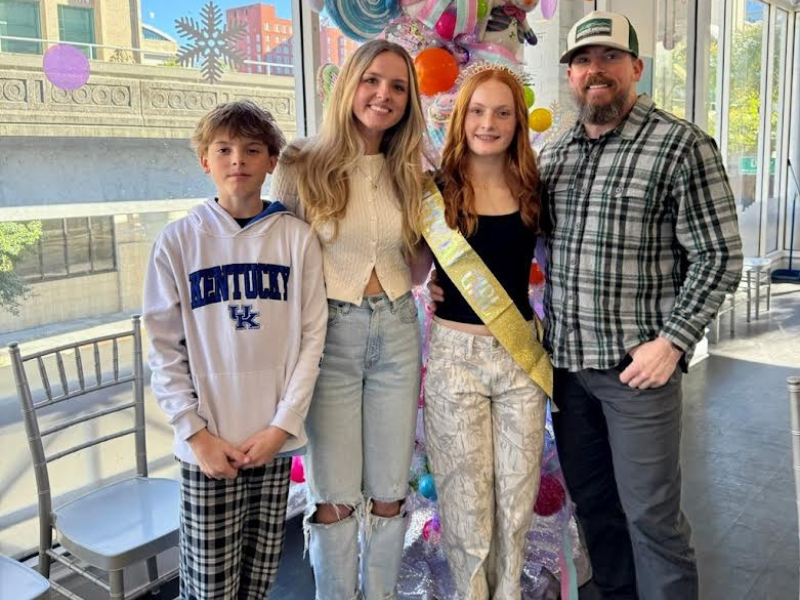
If my story helps even one person recognize symptoms, ask about genetic testing, seek care from an HCM specialist, or believe that life can still be full after an HCM diagnosis, then every mile I’ve ridden has been worthwhile.
HCM changed my heart. It changed my priorities. It changed the path my life has taken. But it never took away my determination to keep moving forward.
My heart is different.
That doesn’t mean my life has to be.