
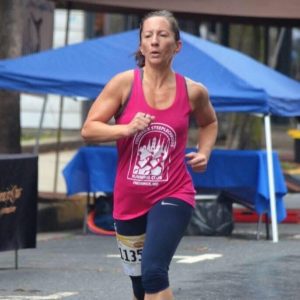
 The SADS Foundation encourages families to take a medical history of their immediate and extended family. What follows is a prime example of why.
Patrei, a mother of three, didn’t know Long QT ran in her family until 2020, but her aunt Heidi was diagnosed in 1990. How could something like that happen? Easily. In fact, it’s common when family histories aren’t shared or fully understood.
Patrei explains: “The job Heidi had at the time required annual physicals and her EKG was not normal. That’s all they told her. That, and she needed to be seen by her primary (physician) to be cleared for work. Not by a cardiologist or EP, just her primary. Her primary told her she was fine and had nothing to worry about.”
“Her primary (physician) told her she was fine and had nothing to worry about.”
Sixteen years passed before her aunt received concrete answers and intervention. “In 2006 she wasn’t feeling well (it ended up being bronchitis and pneumonia) and her doctor did an EKG and her QT interval was in the 600s,” says Patrei. “She then decided to see an EP and her interval was still very high on another EKG and a stress test.”
Her history of falling asleep while driving was now interpreted as syncope. Her aunt and aunt’s daughter, who experienced syncope and a prolonged QT interval on an EKG, had ICDs implanted.
Another aunt (Heidi’s little sister) died in 1974 during lifeguard training. She had previously been diagnosed with epilepsy. The family now believes she had cardiac events that caused seizures, likely due to undiagnosed Long QT.
Fast forward to early 2020 when Patrei learned her aunt had Long QT Syndrome. “Heidi told me she had genetic testing and the kids and I should be tested as well,” says Patrei. Covid was raging at the time, so Patrei waited to be tested until Covid died down.
“She told me she had genetic testing and the kids and I should be tested as well.”
In October 2021, Patrei was still unaware she had LQTS but was about to find out. A month earlier in September, her ophthalmologist prescribed an antibiotic eye drop (Moxifloxacin) for a cornea tear. She 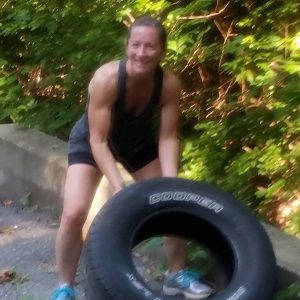 obviously did not know this medication was on the CredibleMeds Drugs To Avoid list for congenital LQTS patients. (This medication causes a drop in potassium and is often how many LQTS patients find
out they have this condition.) As she began a workout on October 6th , she soon felt light-headed, dizzy, experienced a loss of hearing, chest tightness, and a feeling of intense heart pounding, though her athletic heart rate monitor showed a normal heart rate. A few days later on Sunday, when it took her 20 minutes to run a mile and a half she knew something was very wrong.
The next day her primary care physician ran an EKG and found a prolonged QT interval that made her revisit the conversation with her aunt. She thought: “This makes sense.” Genetic testing confirmed she has the genetic mutation (KCNQ1) for Long QT 1 just like her aunt. Further genetic testing revealed one of Patrei’s three children also has LQTS.
Since Patrei knew this would be passed by her mother, she discussed it with her. When Patrei’s mother was a child, she had a strep infection that caused rheumatic fever and heart complications, so her mother had a cardiologist all her life. But when her mother went to her cardiologist and shared about her daughter having Long QT, Patrei says, ”The doctor said she didn’t need to worry about it and didn’t think she had it. Soon after, he decided to put my mother on Flecainide which is also on the Drugs To Avoid list – and she had a reaction. The cardiologist conducted a stress test and caught a significantly prolonged QT interval.”
“Doctors can sometimes be dismissive.”
 “Doctors can very clearly be dismissive of the facts, especially looking at my mother’s case,” says Patrei, who expresses the importance of self-education to appropriately and more effectively advocate for yourself and family rather than relying solely on information from doctors.
To date, Patrei has had four cardiac events – one a car wreck she was lucky to walk away from. She’s currently taking Nadolol, but that hasn’t returned her to life as it was before. “My quality of life is zero. I’m fatigued all the time. I haven’t been to the gym or done anything in well over a year, because I feel so lifeless.”
She sees clearly the need for more research and better treatment for Long QT Syndrome and all SADS conditions. That’s why shortly after her diagnosis, she held a fundraiser at the very gym where she had the last episode before diagnosis with the purpose of educating others on SADS conditions. SADS is grateful to Patrei for the fundraiser that benefited SADS and ultimately provides help for SADS families. She holds out hope that research will present a better future.
If you’d like to learn more about easy fundraising through SADS, click here for more information.
I have had a pacemaker for nearly 20 years, because I was regularly fainting and passing out, and I always had a slow heart rate (about 50, sometimes faster, sometimes slower.)
I don’t remember any blood tests being taken, apart from routine ones, but I do wonder now if I have LQTS- because my late brother always had a slow heart rate, and his daughter – my niece – has just been diagnosed with LQTS
What I want to know is should I ask to have the blood test, in view of the fact that four of my five adult children also have very slow heart rates?
You should have genetic testing to know for sure. I was fortunate enough to know it ran in my family so when I experienced what I assume to be symptoms of substantially low potassium and had a sudden decrease in performance during workouts, I saw my primary physician and she did an EKG that showed a prolonged QT interval. I took it from there finding a genetics counselor on my own. I knew my insurance wouldn’t pay for it but it had to be done. It’s important to know why you have to have either a defibrillator or pacing as that can determine which medication is most effective for your condition. I know many people who have chosen to go untested and are on a medication that may not be the one they need to take.
This condition is in my family. My daughter was diagnosed when on a contra indicated drug after the birth of her child and a had a subsequent loss of consciousness that led to hospitalisation.
I informed my wider family after my elderly mother was found to have the gene. I have it and many relatives also have it. An aunt has had a number of cardiac arrests. My grandfather died unexpectedly after surgery and I suspect this was the cause.
My daughter has had to have a number of surgeries to implant an ICD, and later to remove that and implant a pacemaker and a newer ICD. I think after many years of living in fear she finally feels heard by the medical profession and much safer.
This condition needs to be taken very seriously!