
by Danielle Mundondo
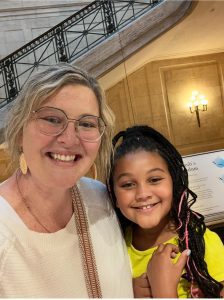 It’s been over five years since I last wrote. That piece was called Holding My Breath. Today, I come to you with its natural follow-up: Letting Go.
Alanna is doing well—thankfully, she hasn’t experienced any cardiac events that we’re aware of. She’s now 10, which is a milestone that carries weight in our family. She’s a year older than my mom was when she first began showing symptoms of Long QT Syndrome. Originally, I intended to write this when Alanna turned 9. That age had quietly haunted me for years. I feared puberty might trigger cardiac events, just like it had for my mom. As nine approached, anxiety gripped me, and I began to spiral emotionally. So I waited. I needed time to process life with a preteen navigating this condition.
Even now, I still check on Alanna each night. I stand in her doorway, watching her chest rise and fall before tiptoeing back to bed. Every morning, I hold my breath when I call to wake her. If she doesn’t answer immediately, my mind races to the darkest possibilities: What if she didn’t wake up? What if I slept through the unthinkable? It’s an exhausting way to start and end every single day.
Many nights, I find myself in the kitchen after everyone is asleep, quietly crying. That’s when the mask comes off. I’m the strong one—the glue that holds everything together—but sometimes, I want to fall apart. I can’t, though. No one else can carry what I carry. People think I’m strong because I’ve practiced being strong when I’ve had no other choice.
Right now, letting go feels like the overarching theme of life with Alanna. That’s probably true for any mother of a preteen, but with her, it’s more complex. She wants more independence like walks with friends around the neighborhood or playdates at homes where I don’t know the parents well. That means hard conversations: texts and phone calls where I explain Alanna’s heart condition, that she carries an AED, and then ask the question no parent ever wants to ask:
“Are you comfortable having her?”
I always offer an out:
“I totally understand if it feels like too much. We can reschedule or have [insert friend’s name] over here instead.”
But every time, the fear of her being left out because of her condition breaks my heart—because I know it would break hers.
We’re also navigating another kind of letting go—Alanna pulling back from talking about her Long QT. She used to want to raise awareness. Now, she just wants to be normal. She doesn’t want to discuss it, and she certainly doesn’t want others to know. Still, we’re fortunate. She’s responsible. She takes her medication without complaint and understands the importance of her appointments and the occasional need for disclosure in the name of safety.
As we let go of toddler Alanna and embrace the strong young woman she’s becoming, I see more hills and valleys ahead—more questions, more uncertainty, more moments of holding my breath. Can I handle it? I have to. I’m her mom. I will always give everything I have to keep her safe.
 Even though Alanna is stepping away from advocacy right now, I continue to do my part. Last year, I participated in a clinical trial for a drug that could actually shorten the QT interval. That’s huge. The moment I heard about it, I knew I had to get involved—not for me, but for Alanna, for her future children, and for the generations that come after. Whether it reaches FDA approval in my lifetime doesn’t matter. What matters is doing everything I can to help create a safer future for her.
So yes—Alanna is thriving. And I’m hanging in there. We’re taking it one day at a time, and I’m learning to loosen my grip, little by little. Because Alanna is meant to live fully—and this mama is learning to let go, just enough, so she can.