In the fall of 2013, Steve and his wife traded swim practice drop-off and pick-up duty for long nights under the glaring fluorescent lights of a pediatric CVICU. Kate, their 15-year-old daughter, had just been hospitalized for a syncopal (fainting) episode during a swim practice – which was the beginning of a long journey of genetic testing, heart catheterizations, hours of cardiology appointments, echocardiograms, EKGs, and Kate’s least favorite thing – PT/INR lab draws.
Soon the acronym ARVC – Arrhythmogenic Right Ventricular Cardiomyopathy – climbed to the top of Steve’s search engine suggestions as he tried to grapple with the implications of this diagnosis on Kate’s health and her future. This column was written to provide guidance in your heroic and, yes, terrifying journey of becoming a caretaker of a child with a chronic illness.
Despite the challenges that Kate has faced, and her ARVC diagnosis, today she’s a practicing RN.
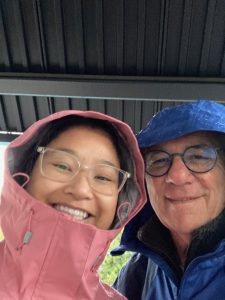 Lesson #1: Sometimes the hospital is the safest place for your loved one – even though it’s hard to be there.
This was what Steve’s neighbor, the chief of cardiology at their local hospital, told him when Kate was in the ICU.
“Don’t be in a rush to get her out of the hospital, is what he told me,” says Steve. “It’s the safest place for her to be right now.”
Lesson #2: You will not “get over” the fear.
Steve also asked his neighbor – “will I ever get over this fear I have, every single day, about Kate’s condition?” His neighbor said, “You’re strong – but no, you won’t.” Steve describes this conversation as his “foundation in being an ARVC parent.”
Steve says that incorporating, accepting, and dealing with the daily fear and anxiety that comes with life- changing diagnosis like ARVC is a better approach than trying to “get over” it.
“Even when we go swimming, I try to keep up with her – which is hard for me; she’s still an excellent swimmer,” he says. “I know I’m close by. The anticipation, that what’s going to happen today?, is the hardest part of being a caretaker of someone with a condition like ARVC.”
“Incorporating, accepting, and dealing with the daily fear and anxiety that comes with life- changing diagnosis like ARVC is a better approach than trying to ‘get over’ it.”
Lesson #3: Accept that your loved one has their own life – and that they deserve for that life to be as normal as possible.
When Kate went to nursing school in Oregon, Steve found himself both proud – and anxious.
“When we leave her after visiting, it’s that same fear – is it the right decision, to leave her alone?” he says. “But it was on me to accept the fact that she has her own life – and that she should have a normal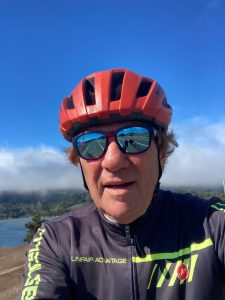 life.”
Lesson #4: You are a consumer purchasing medical care – and it’s OK to ask your doctors questions or get a second opinion.
“I grew up in an environment where we knew our family doctor so well,” says Steve. “He’d review my report card; his wife would bake us cookies. He’d catch me trying to skip school by putting my thermometer in hot water. But I’ve had to learn that it’s OK to ask the doctors and nurses questions.”
Kate had an ICD implanted before she returned from the ICU. “I remember that when they talked to us about it, they made it seem like a small, trivial treatment,” he says. “But this device was actually a monumental change in her life. Medical professionals don’t always realize that changes they see as small are actually incredibly large changes for patients on a day-to-day basis.”
Steve now frames his interactions with medical professionals a little differently. “We are consumers purchasing medical care,” he says. “And as a consumer, it’s our right to gently ask doctors questions like: How did you reach that conclusion? What’s the recovery process? What else could this be?. You also always have a right to a second opinion.
“As a consumer, it’s our right to gently ask doctors questions like: How did you reach that conclusion? What’s the recovery process? What else could this be?. You also always have a right to a second opinion.”
“When I first got my pilot license, I was so in awe of other people who flew. But the more I was around other pilots, I realized that there were some people I actually wouldn’t want to fly with. It’s the same with medical professionals. There are some who are wonderful, genuine, and caring – and some that you don’t actually want to trust with your care. You can test-drive a medical team, just like you’d test-drive a car 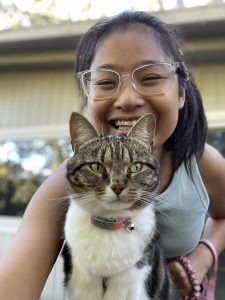 before you buy it.”
Lesson #5: Find a way to take care of yourself.
“The ICU was intense,” says Steve. “Even leaving to get a cup of coffee made me feel like I was abandoning my daughter. And it hasn’t gotten any easier – I remember asking one of her doctors if any changes in her heart would be slow, or if they’d happen quickly and catastrophically. That’s where my brain is with Kate, all of the time.”
That’s why Steve started walking with other parents whose children were in the ICU: to get them out of that environment, and give them a break. That doesn’t end when your loved one is out of the ICU, he says; you still have to find a way to remove yourself from the stressors of caretaking and release that anxiety.
Steve has found a way to release his energy – and let go of some of his anxiety – through marathons, swimming, cycling, and playing golf. “There isn’t a day that goes by that I don’t exercise – that’s what helps me, and helps clear my mind,” he says. “But it doesn’t have to be exercise. Find something in your life that works for you – whether it’s taking deep breaths in the shower or singing along to a song in the car.”
“It’s a team effort for the whole family when you’re caring for someone with a chronic condition like ARVC.”
Steve wants to note that even though this blog might be a quick read, it took a lifetime for him to incorporate these lessons into his own life – and that it’s a team effort for the whole family when you’re caring for someone with a chronic condition like ARVC.
“I try to shelter my Kate from my concerns,” he says. “I try to treat her like any other member of the family despite my worry. But that puts a burden on me. I can handle it, and take care of it, for both me and for her. You have to find something that works for you.”
If you’d like to connect with Steve, you can email him here. Steve will be running an ultra marathon this year and a week or so later, 32 mile ultra marathon to fundraise for SADS.
Make a donation to the SADS Foundation to support ongoing research into SADS conditions like ARVC here.